
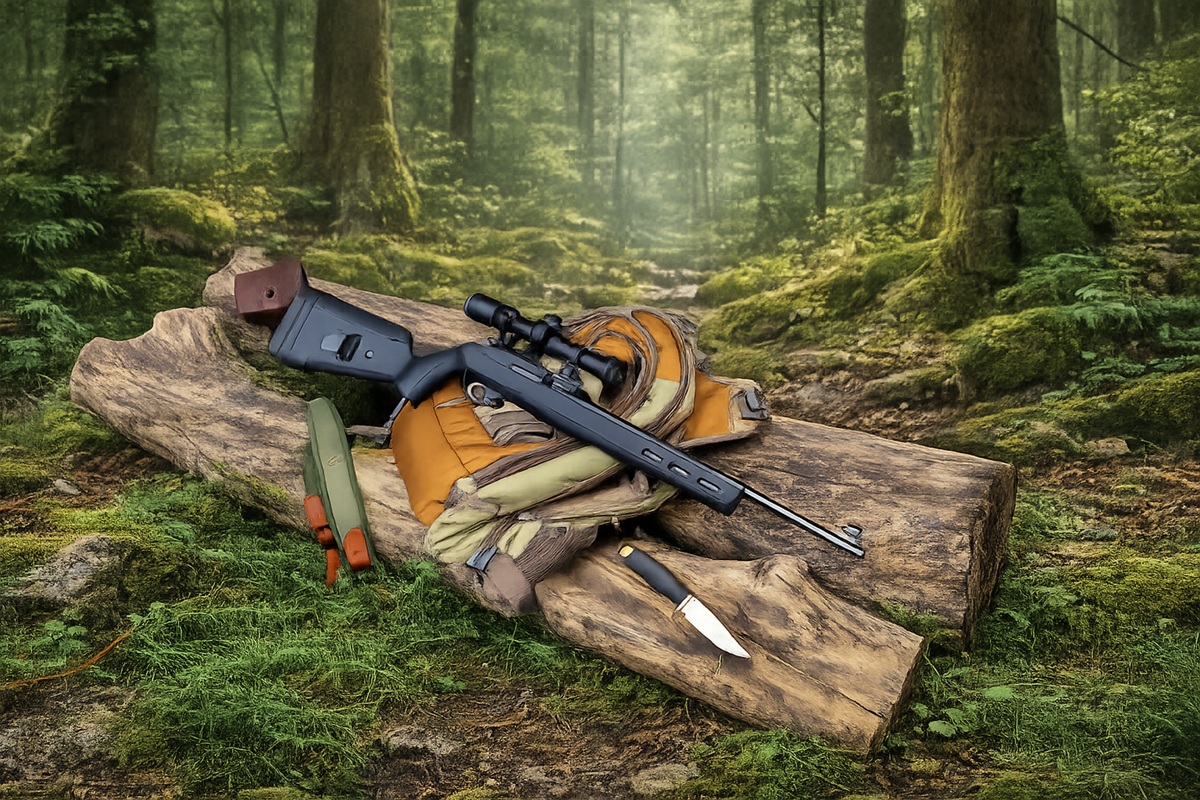
Legal firearm ownership is a topic of debate worldwide. In a culturally rich and diverse country like India, citizens face stringent laws and regulations before they can own a licensed gun or rifle. Legal firearms & rifles in India include a strict regulatory framework concerning their manufacture, sale, import, export, transport, acquisition, and possession.
The Arms Act 1959 mandates gun licenses for civilians only for purposes such as self-protection, sports and target practice, crop protection against wildlife, and for poultry and domestic livestock protection. Civilian firearm possession is limited to non-prohibited guns or weapons and .22 calibre rifles. The updated version of the Arms Rules 2016 states that firearm possession involves certain application procedures, validity periods, and a prohibition on the acquisition of automatic weapons for civilians.
Salient Points on New Arms Rules 2016
- The Arms Rules was renewed in 2016, in place of the outdated Arms Rules 1962
- Reforms, including biometric verification, online application sites, and other specific categories, were added
- Advanced tracking measures were introduced for firearms manufacturing and imports
- Prohibitions were imposed on the illegal conversion of non-prohibited guns into prohibited ones
- Strategies were planned to modernise enforcement and prevent illegal gun imports
- Later, the Arms Rules 2016 was amended in February 2020 to allow specific permits
Civilians in India can purchase licensed firearms for certain valid reasons. Some of the permit categories are mentioned below:
- License for self-protection – Granted to civilians who demonstrate a serious threat to their life, supported by real evidence such as proof of threats and prior attacks. Such individuals are authorised to buy a maximum of two smoothbore guns or NPB handguns. Applicants’ licenses may be revoked if and when the threat diminishes. According to new regulations, licenses for self-protection require proper endorsement in accordance with the Arms Rules 2016.
- Licenses for sports & target practices – These are granted to verified members (for competitive purposes only) of specific affiliated clubs, state shooting associations, and the National Rifle Association of India. Such individuals can possess up to 2 rifles or guns in the permitted .22 rimfire category. Applicants need to showcase proof of being an active member, such as competition records or a training card. The ammunition limits for such gun possession are limited. The licenses are meant only for specific range usage, and the guns cannot be carried outside the facilities.
- Licenses for crop and livestock safety – Licenses for legal firearms & rifles in India can also be given to rural residents, such as farmers and livestock owners, for protection against wild animals. These individuals are authorised to possess guns (smoothbore shotguns) if they reside in areas prone to wildlife populations, with additional documents endorsed by the local forest officers. Such firearm licenses are also meant to provide cover for the entire family and farmlands. Gun owners need to have a separate gun storage space to prevent any mishap or misuse. These are typically low-calibre arms suitable for animal targets.
- Miscellaneous Categories – For obtaining legal firearms & rifles in India, apart from civilians, licenses are also granted to gun manufacturers, gunsmiths, firearm dealers, and heirloom owners. Such licenses can be renewed without valid purposes. All license owners have to provide safe storage spaces in permitted cabinets to achieve total security and minimum proliferation.
Eligibility Criteria for Gun Applicants
To buy legal rifles & guns in India, civilians or applicants have to pass the eligibility criteria. Applicants must show proof of Indian citizenship. Non-citizens are not eligible to apply for gun licenses (except under certain exemptions). Applicants below 21 years cannot apply, except for the under-21 sport shooters category for NRAI or the National Rifle Association of India. Sport shooters can qualify for supervised arms training from the age of 12. For the under-21 age bracket, parental consent is necessary, and full possession is not given till they are 21 years of age.
Applicants must show proof of character with zero pending criminal proceedings. They must have no criminal record exceeding two years’ imprisonment, specifically convictions involving violent behaviour and misuse of firearms. Police verification statements must ensure a decent family background, no history of anti-social behaviour, and that the applicant is proven unfit under Section 14 of the Arms Act, 1959.
Reputed Gun Suppliers in India
Top licensed firearm suppliers in India include Geam Guns for the year 2026. GEAM Guns are established gun manufacturers and suppliers helping licensed Indians to navigate the complex firearms market and purchase a gun. The company follows all regulatory compliance, along with Pan-India support, to offer the best guidance to buyers.
The GEAM Guns team focuses on transparent dealings, including invoicing, documentation, and collaboration, only with genuine distributors. As an applicant, you can get practical training on hand-holding and safe handling techniques. The team supports lawful gun ownership achieved through smooth compliance procedures.
Authentic manufacturers and suppliers like GEAM Guns know how the civilian market operates. Guns manufacturers concentrate on defence/LE and civilians. Most civilians prefer to buy via licensed Indian gun stores & rifle dealers.
As a prospective gun owner, you can rely on government civil trade channels available on selected portals. Such sources help you gain knowledge about the current gun model availability and pricing before you approach a dealer. Private brands and dealer networks offer guidance on model specifications, dealership credentials, and North India guns footprint details.
Conclusion
Indian gun laws follow stringent regulatory procedures for the safety of every citizen in the country. It plays a key role in maintaining law and order and preventing firearm-related violence. As compared to other nations, Indian gun policies are restrictive to ensure full public safety. A more balanced outlook, prioritising safety and the right to self-defence, could be the ultimate solution to exercise an effective firearm policy in the country.
FAQs
What are the popular civilian gun categories?
Most popular civilian firearm categories include sporting rifles and shotguns, such as .22 and .315 rifles and 12-bore pump action guns. The listing options are available only to licensed and eligible civilians in the NPB category having cleared purpose-based verification.
Can you purchase a gun without a license?
Dealers of legal firearms & rifles in India are required to document and record every sale. If an individual does not have a valid license, he cannot purchase a firearm. Dealers and private brands need to check the licence details, which are duly updated on NDAL-ALIS (National Database of Arms Licenses – Arms License Issuance System).
What were the crucial new market developments in 2026?
In 2026, the Indian Army signed some valued contracts with established manufacturers to procure a large quantity of CQB carbines, highlighting the rapid growth of the small-arms market in India.
Also Read